

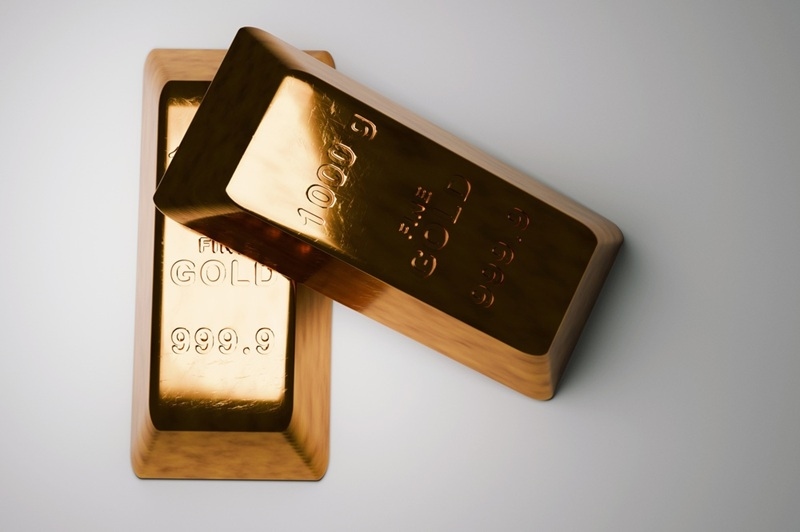
It's obvious when you think about investing in metals that gold immediately comes to mind as the "traditional" metal for investment, given its centuries-old use as a symbol of wealth and security. However, over the past several years, copper has slowly and quietly crept into the spotlight, becoming one of the most talked-about commodities in investment markets.
This is largely due to shifting trends in the global economy. The growth of electric vehicles, the expansion of renewable energy infrastructure, the growth of artificial intelligence, and the general expansion of construction projects are all driving industrial metals demand up across the board, particularly copper. Yet, amid concerns over inflation protection assets and lingering general economic uncertainty, demand for "traditional" haven assets like gold continues to rise.
So naturally, the question of how both metals play out against one another arises: gold vs. copper.
Ultimately, the answer really depends on the type of investor you are, your risk appetite, and what you envision the market holding over the next several years.
In this article, we break down copper vs. gold investing, explain how each metal behaves in different economic climates, and outline what an investor needs to know before investing in either in 2026.
Gold has always been cherished for its store of value in uncertain markets.
During times of recession, market crashes, uncontrolled inflation, or political instability, investors tend to move to gold, as its value generally declines more than that of many other asset classes. Therefore, it is considered a strong asset, well-regarded as one of the world's strongest safe-haven assets.
One reason gold is considered the number 1 gold standard is that it cannot be created or printed at will, unlike currency.
In history, gold prices have done well when:
In terms of global gold demand, the figures for the first 6 months of 2025 were stable according to the World Gold Council. Investors turned to gold for its inflation-hedging properties amid global economic uncertainty. Gold generally trades with lower volatility than most other commodities, which can be particularly attractive to risk-averse investors.
Try This: A Simple Path for Women Investing and Growing Their Money
Whereas gold acts as a hedge against falling investment value, copper serves a far more pragmatic function, fulfilling the requirements of industrial processes.
Copper is integral to:
With ongoing global investment in clean energy and technology, the demand for industrial metals like copper has soared. The International Energy Agency estimates that demand for copper used solely in electric vehicles may double over the next 10 years, and investors should not miss this. As such, the investment required has led investors to consider copper not just as a commodity but as an unmissable growth opportunity. Although rather than fulfilling investors' demand for a safe-haven asset like gold, copper typically works in the opposite direction. It thrives during times when the economy is on the up and when demand for industrial metals is high.
The fundamental difference between investing in copper and gold lies simply in how sensitive they are to the economy.
Gold performs best when investors fear economic uncertainty.
Copper, however, performs best when the economy is growing.
This difference can result in the following two different behaviors:
Gold Is Used For:
Copper Is Used For:
As such, prices of gold and copper may often act at opposite ends of the spectrum. Where demand for gold increases as investors flee instability, demand for copper often drops during economic contractions, when industries can no longer afford or need to buy large quantities of raw materials.
This is a particularly interesting question. Gold is known as the "safe-haven asset" that protects investors against inflation, allowing them to preserve value when currencies are weak. However, inflation is also a result of a hot economy. As the economy grows, industrial demand rises, and so will the prices of certain materials like copper.
While copper could also benefit, gold is more reliably known as the safer inflation hedge because its performance is more direct against the threat of a depreciating currency.
In the vast majority of cases, yes. This is due to the fact that the value of copper is closely tied to the following:
As a result, copper will naturally be more sensitive to negative economic changes, whereas gold's value is less intrinsically tied to specific industrial outputs and is purchased primarily as a stable, more protected investment vehicle. For new investors, this is a crucial distinction to keep in mind, as copper can gain quite a bit of value in growth economies; however, prices will also plummet in economic downturns.
Must Try: Growing Your Money with Simple Passive Investing Plans
Most investors have now moved beyond a simple choice between copper and gold. Rather, many now believe the optimal way to gain from the precious metals market is to diversify into both gold and copper.
Combining gold and copper ensures investors are diversified enough to avoid missing out on opportunities during periods of both economic weakness and growth, and also protects against potential downturns in either metal.
Heading into 2026, precious metals are expected to continue moving on the trajectory that has characterized their performance in recent years.
That said, copper may continue to trade at elevated levels, and if demand remains at this accelerated pace with insufficient supply entering the market, prices could still see significant upward momentum. Both assets are likely to remain important investments for different reasons.
Gold and copper may both be commodities valued for their investment properties, but they possess very different traits. Gold has solidified itself as a prime safe-haven investment, consistently offering security and value amid periods of high inflation, erratic markets, and broader global uncertainty. Conversely, due to its recent demand surge, copper is a more growth-oriented investment focused on industry and technology.
In this article, we have taken a close look at how copper vs. gold investing differs during different economic events and why many investors tend to add both to supplement their investment portfolios. We've pinpointed areas such as industrial demand, inflation-protected assets, and the outlook for precious metals in 2026. Gold provides a hedge while copper provides growth. Therefore, only invest in gold and copper when they have defined investment objectives and consider their risk tolerance and future market outlook.
Gold continues to be recognized as one of the most reliable safe haven assets worldwide. Investors will turn to gold when their portfolio needs protection against economic downturns, inflation surges, geopolitical uncertainty, or extreme stock market volatility, since it is a reliable hedge and a long-term store of wealth.
Copper demand is increasing rapidly as the world's demand for electric vehicles, renewable energy, and AI systems is driving the industry. Modern machinery requires a high volume of copper wires and electrical components, increasing industrial metal consumption.
Yes, a beginner investor can invest in copper and gold through buying ETFs, investing in commodity diversification and mining stocks and funds, and getting exposure without buying physical metal. Investing in both commodities may add diversification to an investor's portfolio and enhance its long-term value.
This content was created by AI